How PlayStation Network Is Built: A System Design Breakdown (Including Its Kubernetes Outages)
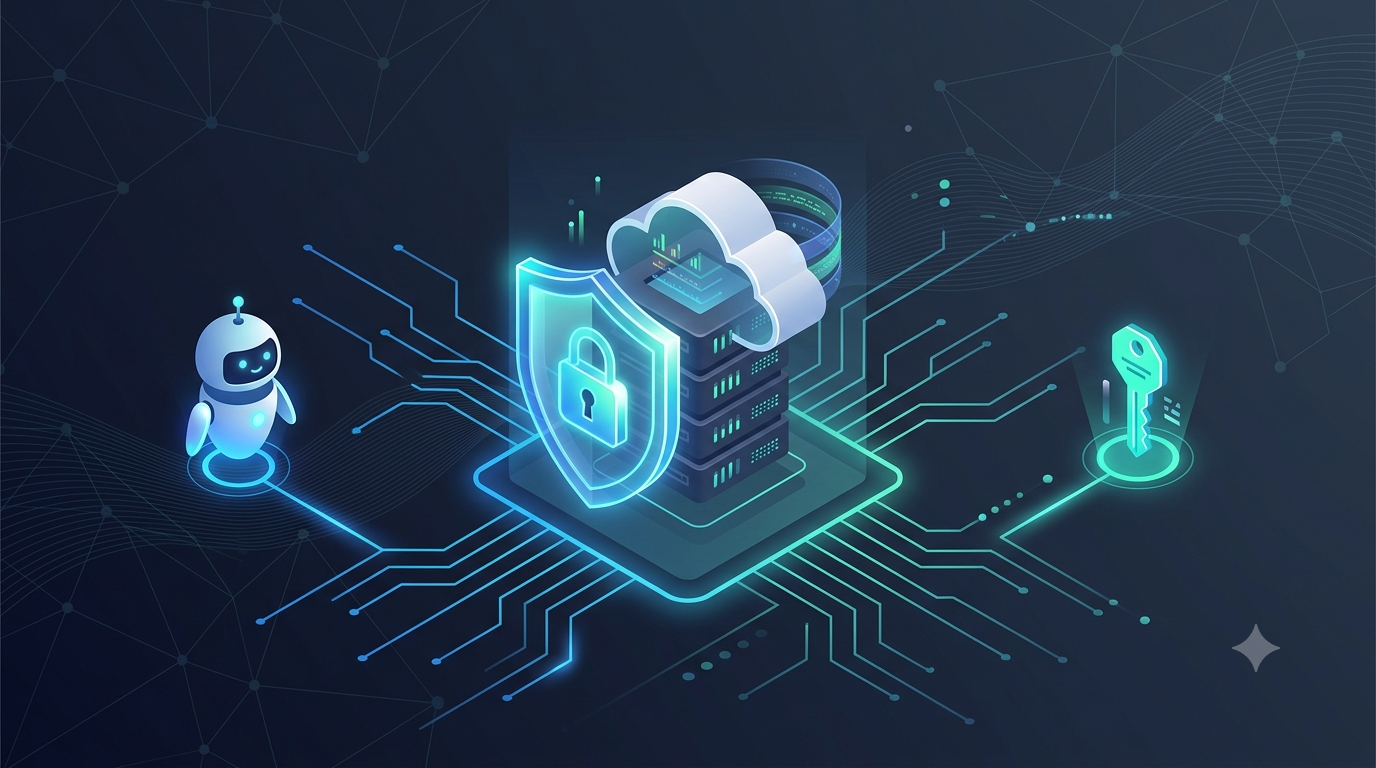
If you've been following the PlayStation Plus monthly games hype lately, you already know Sony ships new titles to hundreds of millions of accounts every month, on a fixed schedule, across every timezone on Earth. What almost nobody talks about is the infrastructure that makes this possible — and what happens when it breaks.
This isn't a gaming news post. It's a system design teardown: how PlayStation Network (PSN) is actually built, what problems it has to solve at scale, and what its real, documented outages teach us about designing resilient distributed systems. If you're studying for system design interviews or just want to understand how a platform this size stays online, this one's for you.
What PlayStation Network Actually Has to Do
It's easy to think of PSN as "the servers that let you play online." In reality, it's a portfolio of distinct services that all have to work together, each with very different scaling and consistency requirements:
- Authentication and account management — sign-ins, sessions, and account security for a massive global user base
- Entitlements and licensing — checking whether an account owns or has access to a specific game, including everything added through PS Plus tiers
- The PS Plus catalog itself — Essential, Extra, and Premium tiers each with different game libraries that rotate monthly, meaning entitlement data changes constantly and has to propagate correctly to every device
- Store and billing — purchases, subscriptions, refunds, regional pricing
- Social and multiplayer infrastructure — friends lists, messaging, matchmaking, party chat
- Leaderboards and trophies — frequently written, frequently read, globally ranked data
- Content delivery — patches, game installs, and the day-one downloads that come with new PS Plus releases
Each of these has different traffic patterns. A new day-one PS Plus release can spike download and entitlement-check traffic instantly, worldwide, the moment it unlocks — which is a very different load profile than the slow, steady traffic of someone checking their trophy list.
The Architecture Behind It
Sony has been public about moving large parts of PSN's backend onto AWS. The general shape of the architecture, based on Sony and AWS's own published descriptions, looks roughly like this:
- Container orchestration for smaller services — lighter-weight backend services (account checks, game license validation, social features, and background jobs) run on managed container services rather than static server fleets, so Sony can scale them up or down and ship updates without redeploying entire environments
- Managed caching layers — a service handling this much read traffic (entitlement checks, session lookups, leaderboard reads) needs an in-memory caching layer sitting in front of the primary databases, or the databases would fall over under load
- Managed NoSQL storage — account metadata, session state, and similar high-volume, simple-lookup data are well suited to managed key-value or document stores rather than a single relational database
- Event-driven messaging — queues and pub/sub systems decouple services from each other, so a spike in one area (say, a new game's release) doesn't directly overload every downstream service
- Serverless compute for bursty workloads — some background and event-triggered work runs on functions-as-a-service rather than always-on servers, which is a natural fit for spiky, unpredictable load like a surprise day-one PS Plus drop
- Kubernetes for orchestration at the cluster level — for larger, more complex service groups, PSN infrastructure runs on Kubernetes-based container orchestration, which is also where its most notable recent failures originated
This is a pretty standard "modern cloud-native platform" architecture — nothing exotic. What makes it interesting is what happens when a piece of it fails, because PSN operates at a scale where even small mistakes have an enormous blast radius.
What Went Wrong: The PSN Outages
Sony experienced a string of significant PlayStation Network outages in late 2024 and early 2025. According to reporting on Sony's own internal engineering account of these incidents, at least one outage was traced back to routine Kubernetes cluster maintenance gone wrong — specifically, an attempt to merge clusters combined with a software update that ended up removing critical cluster networking components (the internal DNS service and a core networking plugin that Kubernetes pods rely on to communicate).
That's a textbook example of a class of failure every backend and DevOps engineer should recognize: infrastructure housekeeping that turns into a production incident. A cluster merge is the kind of task that looks routine on a runbook, but it touches shared, load-bearing components — DNS resolution and pod-to-pod networking — that every single service in the cluster depends on. When those go down, it doesn't matter how well-architected any individual service is. Nothing can talk to anything else.
Why This Keeps Happening Across the Industry
If this sounds familiar, it's because the same failure pattern has taken down other major platforms. Large outages at companies like OpenAI and Meta have followed a near-identical shape: a routine infrastructure or configuration change interacts badly with a shared control-plane component, and a change that was supposed to be isolated instead cascades outward into a full platform outage. The specific technology varies — Kubernetes control planes, network configuration changes, DNS — but the underlying failure mode is the same: shared infrastructure with no blast-radius containment.
This is exactly why "system design case studies from real outages" has become such a useful genre for engineers to study. The same handful of root causes shows up again and again, at nearly every major tech company, regardless of how much money or engineering talent they have.
The System Design Lessons
Here's what's actually transferable from PSN's incidents to your own systems:
1. Treat shared infrastructure changes as high-risk by default. DNS, service mesh configuration, and core networking plugins are load-bearing for everything running on top of them. A change here deserves more caution and a slower rollout than a change to a single microservice, even if it "looks routine."
2. Phased rollouts aren't optional at scale. Rolling a Kubernetes or networking change out to a subset of a cluster first, watching health signals, and only then continuing is slower — but it converts a platform-wide outage into a contained, quickly-detected incident.
3. Blast radius containment matters more than uptime targets. You can't design a system that never fails. You can design one where a single mistake in one cluster, region, or service doesn't take down every other unrelated service that happens to share infrastructure with it.
4. Entitlement and licensing systems need to fail safe, not fail closed. For a platform like PSN, where "can this account play this game" is checked constantly, a licensing service outage that blocks all play is far more damaging than a load spike. Systems that gate access to paid content need degraded-mode fallbacks, not hard dependencies on a single service being perfectly healthy.
5. Fault injection testing is how you find these problems before your users do. Deliberately breaking pieces of your own infrastructure in a controlled environment (chaos engineering, essentially) is how companies catch these dependency chains before a routine maintenance task turns into a multi-hour outage.
Why This Matters Beyond Gaming
PlayStation Network is a useful case study precisely because it isn't a typical "tech company" backend — it's consumer entertainment infrastructure operating at a scale and reliability bar similar to Netflix or a major bank's mobile app, but with spikier, less predictable traffic patterns driven by game releases and monthly content drops. If you're studying system design for interviews, or just trying to build more resilient infrastructure at your own job, PSN's public architecture and its documented failures are a genuinely useful, underused real-world reference — most system design content recycles the same Netflix, Uber, and Twitter examples. This is a different data point with the same underlying lessons.
Key Takeaways
- PSN is built on a fairly standard modern cloud-native stack: managed containers, caching, NoSQL storage, event-driven messaging, and Kubernetes-based orchestration
- Its most significant recent outages trace back to Kubernetes cluster maintenance that took down shared networking infrastructure (DNS and pod networking)
- This is the same failure pattern seen in outages at other major platforms: routine changes to shared infrastructure with no blast-radius containment
- The fix isn't "don't make changes" — it's phased rollouts, fault injection testing, and designing dependent systems (like game entitlement checks) to fail safe rather than fail closed
Sources referenced: AWS's published case study on Sony/PlayStation Network's cloud infrastructure; reporting on Sony's internal engineering account of its 2024–2025 PlayStation Network outages; CNCF/Kubernetes documentation on cluster networking components (CoreDNS, CNI plugins).
Ad Space
Related Modules
Kubernetes Oxide integration (2026)
Learn how to integrate Kubernetes on Oxide for efficient container orchestration and discover the benefits of Kubernetes Oxide integration

Authentication & Authorization in System Design (2026)
Learn the fundamentals of authentication and authorization in system design and how to implement them securely.

What is Docker and How It Works
Learn what Docker is, how Docker works internally, and how Docker containers differ from virtual machines in backend development.